
From Nigel's Kitchen Table
Apple Honey Cake
A simple Victoria-style sponge layered with apples, cinnamon and wildflower honey for a soft, warmly spiced cake.
Navigate the recipe
On this page
The recipe, step by step
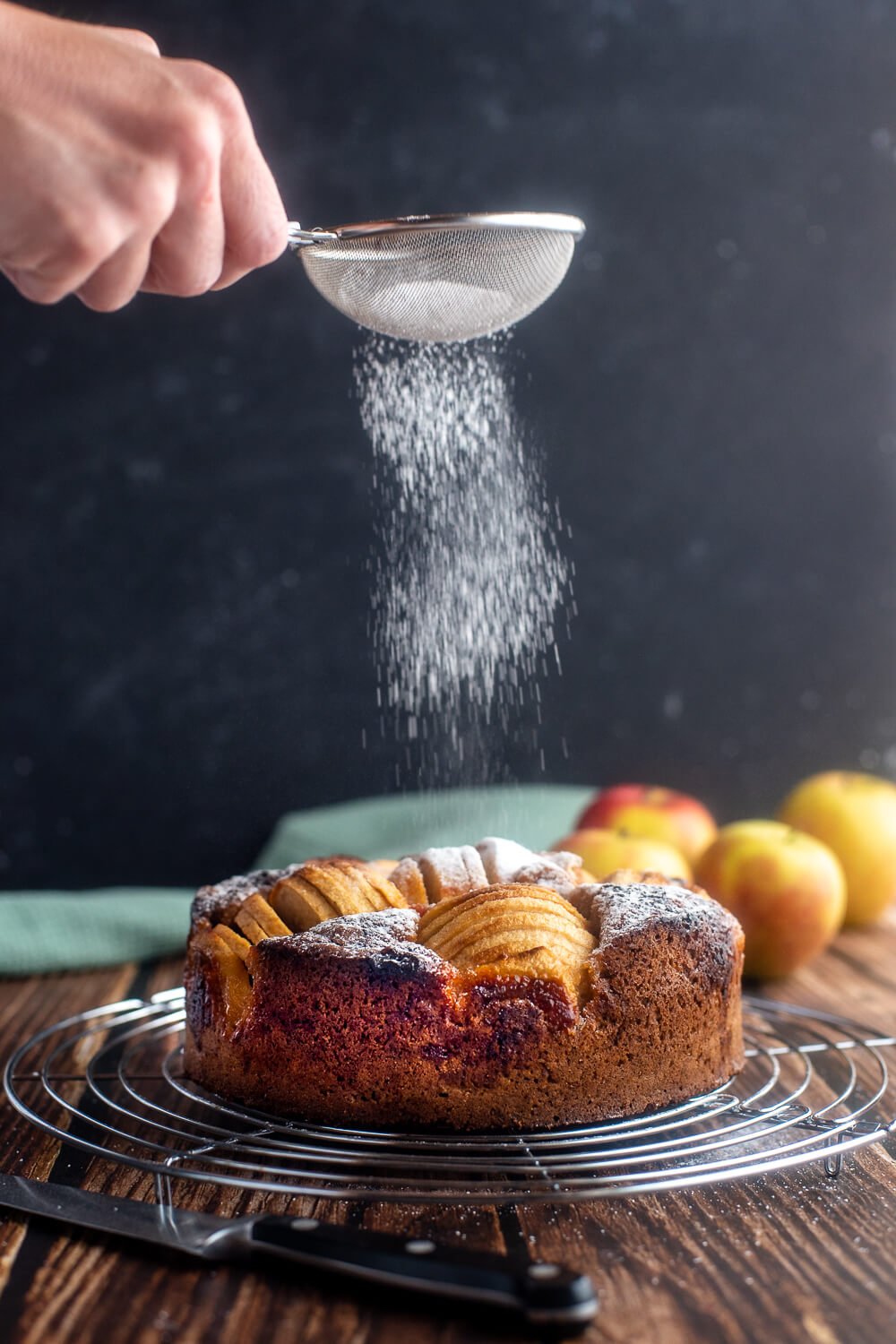
This apple honey cake is the sort of bake I love placing in the middle of the kitchen table: generous, comforting and filled with familiar flavours.
The soft, buttery sponge is gently flavoured with cinnamon and vanilla, then topped with slices of apple and a generous drizzle of runny honey. As the cake bakes, the apples soften into the sponge while the honey caramelises slightly, creating a beautifully golden finish.
It makes ten generous slices and is equally welcome alongside an afternoon cup of tea or served warm as a comforting pudding. Preparation takes around 20 minutes, followed by 45–50 minutes in the oven.
Your choice of apples and honey will subtly shape the finished flavour. Bramley apples provide a lovely sharp contrast to the sweet sponge, while Granny Smith and Braeburn also work beautifully. A mild runny honey keeps the flavour delicate, whereas a darker or more distinctive honey gives the cake a little extra character.
For more apple baking inspiration, try my Apple Buttermilk Cake, Apple and Blueberry Strudel or Apple Rose Tartlets.
Why You’ll Love This Apple Honey Cake
- Soft, buttery and wonderfully moist
- Topped with tender slices of apple
- Gently flavoured with cinnamon and vanilla
- Finished with naturally sweet runny honey
- Easy to prepare using familiar ingredients
- Delicious warm, cold or at room temperature
- Makes ten generous slices
- Suitable for freezing
Recipe Highlights
- Ease: Easy.
- Taste and texture: A soft, buttery sponge with a familiar Victoria-style crumb, gently flavoured with warming cinnamon and lightly caramelised honey.
- Serving suggestion: Serve it freshly baked, at room temperature or lightly dusted with icing sugar.
- Quantity: Ten generous slices.
- Time: Approximately 20 minutes of preparation and 45–50 minutes of baking.
Ingredients
The full quantities are provided in the recipe card below. These notes explain what each ingredient contributes and where a little extra care can improve the result.
- Butter: Use 200 g of softened butter. It should be at room temperature so that it beats smoothly with the sugar and holds plenty of air.
- Caster sugar: Use 200 g of caster sugar. Its fine crystals cream easily with the butter and help give the sponge a light, even crumb.
- Eggs: Use four medium eggs, weighing approximately 200 g in total. Bring them to room temperature so that they combine more evenly with the butter mixture and are less likely to make it split.
- Milk: Use 2 tablespoons of milk. It loosens the batter slightly and helps keep the finished sponge soft and tender.
- Plain flour: Use 200 g of plain or all-purpose flour, BL55 or an equivalent everyday flour. It provides the structure of the cake, so weigh it carefully to avoid a heavy or dry sponge.
- Baking powder: Use 2 teaspoons of baking powder. It gives the cake its lift, so check that it is still active if the container has been open for a long time.
- Ground cinnamon: Use 1 teaspoon of ground cinnamon. It adds gentle warmth without overpowering the apples.
- Runny honey: Use 4 tablespoons of runny honey. Spoon it over the arranged apples before baking; if it is very thick, warm it gently so that it pours easily.
- Apples: Use 400 g of peeled and cored apples, approximately four medium apples. Bramley apples give a sharp contrast to the sweet sponge, while Granny Smith and Braeburn also work well.
- Vanilla: Use 1 teaspoon of pure vanilla extract or ½ teaspoon of vanilla paste. It rounds out the flavour without overpowering the apples, honey or cinnamon.
Nigel Recommends
The Vanilla I Recommend
I recommend Taylor & Colledge vanilla products because they add a delicious depth of flavour while enhancing the other ingredients in the recipe. Choose from pure vanilla extract, vanilla paste or vanilla pods, depending on the recipe and the intensity of flavour you prefer.
- Fine sea salt: Use ½ teaspoon of fine sea salt. It balances the sweetness and enhances the flavours of the apples, cinnamon, vanilla and honey.
Nigel Recommends
Don’t Skip the Salt
I always recommend adding a generous pinch of fine sea salt to your cakes. It balances the sweetness, softens any bitterness and brings out flavours such as chocolate, vanilla, fruit and spices. You should not taste the salt itself—it simply gives the finished cake greater depth and a more rounded flavour.
How to Make Apple Honey Cake
This is a straightforward creamed cake. Have the ingredients weighed before you begin, and line the tin so the finished cake releases cleanly.
1. Prepare the oven: Preheat the oven to 180°C / 160°C fan / 350°F / Gas 4.
2. Line the tin: Line a 25 cm (10-inch) springform tin with baking parchment.
3. Cream the butter and sugar: Place the softened butter and caster sugar in a large mixing bowl, then beat until pale, light and fluffy.
4. Add the eggs: Add the eggs one at a time, mixing until just combined after each addition.
5. Add the milk and vanilla: Mix in the milk and vanilla until combined.
6. Add the dry ingredients: Sift in the flour, baking powder, fine sea salt and cinnamon, then fold until just combined and smooth.
7. Fill the tin: Spoon the batter into the prepared tin and level the surface.
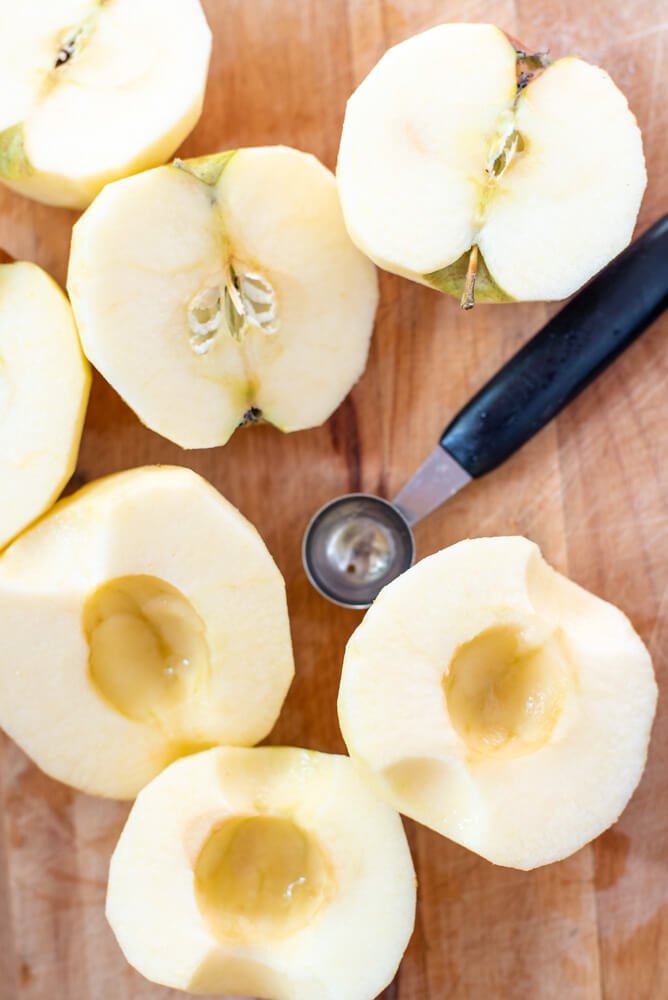
8. Prepare the apples: Peel, halve and core the apples.
9. Arrange the apples: Thinly slice each apple half while keeping the slices together. Arrange them over the batter and press them in by approximately 1 cm (½ inch).
10. Add the honey: Spoon the honey evenly over the apples. Warm it briefly beforehand if necessary so that it pours easily.
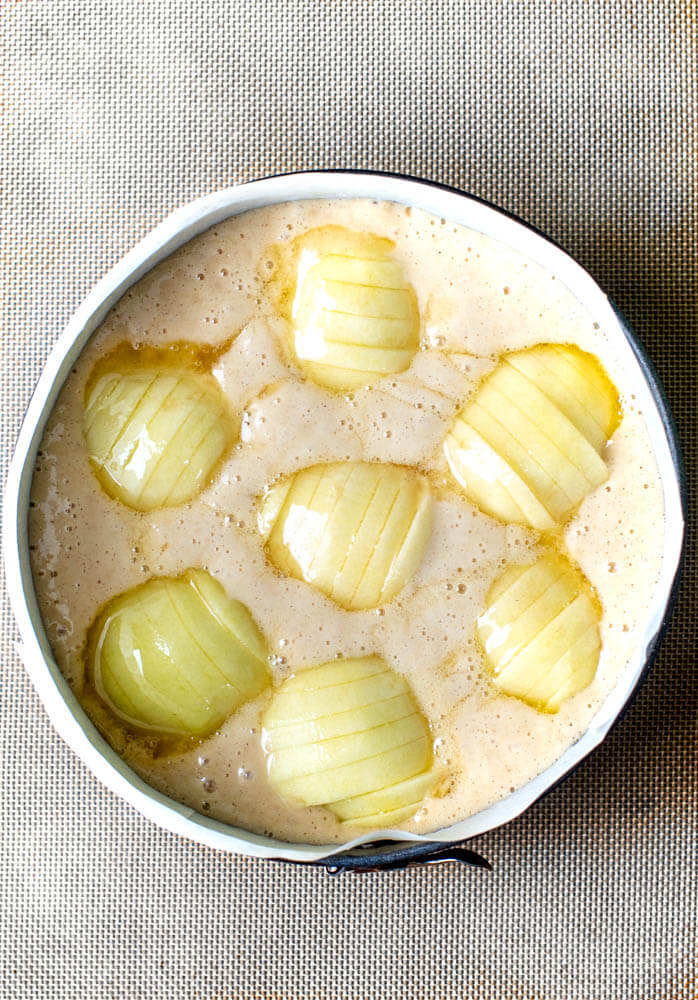
11. Bake the cake: Bake for 45–50 minutes, until golden and a skewer inserted into the cake comes out clean.
12. Cool in the tin: Leave the cake to cool in the tin for 10 minutes.
13. Remove from the tin: Remove the outer ring and leave the cake to cool further.
14. Serve: Serve warm or cold, lightly dusted with icing sugar.
Recipe Tips
Bring Chilled Ingredients to Room Temperature
Softened butter, room-temperature eggs and room-temperature milk combine more evenly. This helps the cake rise properly and creates a fine, tender crumb.
Cream the Butter and Sugar Thoroughly
Continue beating until the mixture looks noticeably paler and fluffier. This traps small pockets of air that expand during baking and contribute to the cake’s texture.
Add the Eggs Gradually
Add the eggs one at a time rather than pouring them in all at once. When the mixture begins to look curdled, add a spoonful of the measured flour and mix gently. It will usually come back together when the remaining flour is folded in.
Do Not Overmix After Adding the Flour
Fold only until the batter is smooth and no dry flour remains. Overmixing develops the gluten and may produce a heavier sponge.
Keep the Apple Slices Together
Slice each apple half without scattering the pieces. Keeping the slices together makes it much easier to lift and arrange decorative fans over the batter.
Use Firm Apples
Choose apples that are firm enough to hold their shape during baking. Very soft or overripe apples may collapse into the sponge and release too much moisture.
Warm Thick Honey Gently
A few seconds of gentle warming should be enough to loosen thick honey. It should be easy to spoon or drizzle but should not be hot when added to the cake.
Check the Centre Carefully
The apples keep the surface of the cake moist, so do not judge it by appearance alone. Insert the skewer into the sponge between the pieces of fruit. It should come out clean or with a few soft crumbs rather than wet batter.
Avoid Opening the Oven Too Early
Opening the oven before the cake has developed enough structure may cause the centre to sink. Wait until close to the end of the expected baking time before checking it.
Allow the Cake to Rest
Leave the cake in its tin for 10 minutes after baking. This gives the crumb time to settle and makes the cake less likely to break when the outer ring is removed.
Apple Honey Cake Variations
Change the Apples
Bramley apples give the cake a noticeably sharp finish. Braeburn apples are a little sweeter, while Granny Smith offers a good balance between sweetness and acidity.
Use Pears
Firm pears can replace the 400 g of apples. Peel, core, slice and arrange them in the same way. Choose pears that are ripe enough to have flavour but still firm enough to retain their shape.
Add Stem Ginger
Fold one finely chopped piece of drained stem ginger through the finished batter for gentle warmth and small bursts of sweetness.
Add Nuts
Chopped walnuts, pecans or almonds would add texture and work particularly well with the apples and honey. Fold them through the batter or scatter a modest amount over the top before baking.
Choose a Different Honey
A mild blossom honey keeps the flavour soft and delicate. Chestnut honey or another strongly flavoured variety will create a darker, more distinctive finish.
Add More Spice
For a warmer version, add a small amount of nutmeg, ground ginger or mixed spice alongside the cinnamon. Use stronger spices sparingly so that the apple remains the main flavour.
How to Serve Apple Honey Cake
This cake is delicious served:
- Warm as a pudding
- At room temperature with tea or coffee
- Lightly dusted with icing sugar
- With softly whipped cream
- With crème fraîche
- With vanilla ice cream
- With a little additional honey
Allow the cake to rest briefly after baking before serving it warm so that the crumb has time to settle.
Nutrition
Serving: one slice of apple honey cake
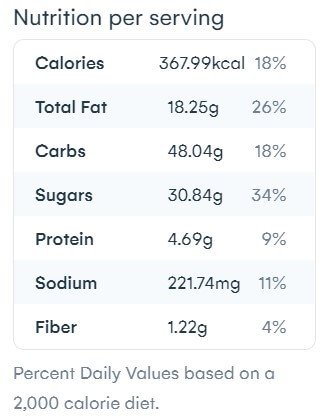
Values will vary according to the exact butter, milk, honey, apples and serving size used. For dietary or medical requirements, calculate the information using the specific ingredients and quantities in your cake.
Storage and Freezing
Allow the cake to cool completely before placing it in an airtight container. Store it somewhere cool and dry for up to five days.
When storing a partly sliced cake, place baking parchment against the exposed edges if necessary to prevent them from sticking or drying out.
Can You Freeze Apple Honey Cake?
Yes. The cake can be frozen whole or divided into individual slices. Wrap it carefully, then place it in an airtight freezer-safe container. Freeze for up to two or three months.
Freezing individual slices is particularly useful when you only want to defrost a small portion.
How to Defrost Apple Honey Cake
Leave the wrapped cake or individual slices to defrost at room temperature.
Keeping the cake wrapped while it thaws helps prevent moisture from escaping and reduces the risk of the sponge drying out.
Tools You’ll Need
Here is some of the kitchen equipment needed to make this apple honey cake:
- Baking parchment
- Small sharp knife
- Chopping board
- Skewer or cake tester
- Fine Mesh Strainer – I recommend this 40 × 25 cm cooling rack because it is ideal for cooling cakes, biscuits and other freshly baked treats. I find it so useful that I have a couple of them, especially when baking several batches at once. You can find it and more of my favourite baking equipment in my Amazon Baking Essentials collection.
- Measuring Spoons – I recommend these magnetic stainless steel measuring spoons for accurately measuring small quantities of ingredients. Their narrow shape fits comfortably inside most spice jars, while the magnetic handles keep the set neatly together for easy storage. You can find them and more of my favourite baking equipment in my Amazon Baking Essentials collection.
- Large mixing bowl or food processor- I recommend the 29 cm Mason Cash cream earthenware mixing bowl because it is sturdy, chip-resistant and has a generous four-litre capacity, making it ideal for everything from cake batters to bread doughs. It is also microwave, freezer and dishwasher safe. You can find this bowl and more of my favourite kitchen tools in my Amazon Baking Essentials collection.
- Springform Cake Pan 25cm – I recommend using springform cake pans because the removable sides make releasing delicate cakes much easier. I still like to line the base and sides with baking paper for extra security and to help prevent the cake from sticking or breaking. You can find these pans and more of my favourite baking equipment in my Amazon Cake Making collection.
- Electric hand whisk – I recommend the Breville Classic Combo Stand and Hand Mixer because it includes a generous 3.7-litre stainless steel bowl and a convenient stand, so you do not have to hold the mixer throughout use. You can find it and more of my favourite baking equipment in my Amazon Kitchen Equipment collection.
- Silicone spatula – I recommend these sturdy silicone spatulas because they are incredibly useful for baking and everyday cooking. Their firm handles make them excellent for scraping mixtures from bowls, dishes and frying pans, while the raised centre of the larger spatula gives it extra strength. You can find them and more of my favourite baking equipment in my Amazon Cake Making collection.
- Wire Cooling Rack -I recommend this 40 × 25 cm cooling rack because it is ideal for cooling cakes, biscuits and other freshly baked treats. I find it so useful that I have a couple of them, especially when baking several batches at once. You can find it and more of my favourite baking equipment in my Amazon Baking Essentials collection.
Frequently Asked Questions
Which apples are best for apple honey cake?
Bramley apples give a good sharp contrast to the sweet sponge. Granny Smith and Braeburn also work well. Whichever variety you choose, use apples that are firm enough to hold their shape during baking.
Can I use a different size tin?
The recipe is designed for a 25 cm (10-inch) springform tin. A smaller tin will make a deeper cake and may need longer in the oven; a larger tin will make a shallower cake that may bake more quickly. For the most reliable result, use the stated size.
Why has my butter mixture curdled?
This usually happens when the eggs are colder than the butter or are added too quickly. Add the eggs one at a time and mix only until combined. A spoonful of the measured flour can help bring the mixture back together.
How do I know when the cake is baked?
The cake should be golden, gently spring back when touched and have a clean skewer when tested in the sponge between the apples. Begin checking at 45 minutes, but allow up to 50 minutes if needed.
Can I serve apple honey cake warm?
Yes. Let it rest in the tin for 10 minutes first so the crumb can settle. It is also very good cold or at room temperature, with a light dusting of icing sugar.
Can I Make the Cake in Advance?
Yes. The cake can be baked a day or two before serving and stored in an airtight container. Its moist texture makes it particularly suitable for preparing in advance.
Why Did My Apples Sink?
The pieces may have been pressed too deeply into the batter, sliced too thickly or may have released a lot of moisture. Press them into the surface by only approximately 1 cm and use firm apples.
Can I Leave Out the Cinnamon?
Yes. The cinnamon adds gentle warmth but is not essential to the structure of the cake. You can leave it out when you prefer a simpler apple, honey and vanilla flavour.
Apple Honey Cake
- 25 cm (10-inch) springform pan
INGREDIENTS LIST
- 200 g butter (softened, at room temperature)
- 200 g caster sugar
- 4 medium eggs (approximately 200 g total, at room temperature)
- 1 tsp pure vanilla extract (or ½ tsp vanilla paste)
- 2 tbsp milk
- 200 g plain flour (all-purpose) (BL55 or equivalent)
- 2 tsp baking powder
- ½ tsp fine sea salt
- 1 tsp ground cinnamon
- 4 tbsp runny honey (see notes)
- 400 g apples peeled and cored (about 4 medium apples)
Preparation
- Prepare the oven: Preheat the oven to 180°C / 160°C fan / 350°F / Gas 4.
- Line the tin: Line a 25 cm (10-inch) springform tin with baking parchment.
- Cream the butter and sugar: Place the softened butter and caster sugar in a large mixing bowl, then beat until pale, light and fluffy.
- Add the eggs: Add the eggs one at a time, mixing until just combined after each addition.
- Add the milk and vanilla: Mix in the milk and vanilla until combined.
- Add the dry ingredients: Sift in the flour, baking powder, fine sea salt and cinnamon, then fold until just combined and smooth.
- Fill the tin: Spoon the batter into the prepared tin and level the surface.
- Prepare the apples: Peel, halve and core the apples.
- Arrange the apples: Thinly slice each apple half while keeping the slices together. Arrange them over the batter and press them in by approximately 1 cm (½ inch).
- Add the honey: Spoon the honey evenly over the apples. Warm it briefly beforehand if necessary so that it pours easily.
- Bake the cake: Bake for 45–50 minutes, until golden and a skewer inserted into the cake comes out clean.
- Cool in the tin: Leave the cake to cool in the tin for 10 minutes.
- Remove from the tin: Remove the outer ring and leave the cake to cool further.
- Serve: Serve warm or cold, lightly dusted with icing sugar.
Notes & Tips
FROM MY KITCHEN TO YOURS
Made this recipe?
I would love to hear how it turned out. Leave a comment and add a star rating to help other home cooks discover the recipe.

A recipe worth keeping
Save this recipe for another day
Pin it to one of your boards and keep it close for the next time you are ready to cook or bake.
Save to PinterestKeep cooking
You may also like
 Recipe
Chocolate Chia Pudding
A creamy vegan chocolate chia pudding topped with rich hazelnut fudge sauce for a simple, satisfying dessert or breakfast.
View recipe Recipe
Coffee & Walnut Loaf Cake
A moist coffee and walnut loaf cake finished with a smooth espresso and vanilla glaze.
View recipe Recipe
Lemon Drizzle Cake
A moist buttery sponge soaked with bright lemon syrup and finished with a sweet citrus glaze.
View recipe
Around the table
Questions and kitchen notes
Made this recipe? Leave a rating and tell me how it turned out. Your questions and tips may also help the next person making it.