
From Nigel's Kitchen Table
Tahini & Carrot Scones
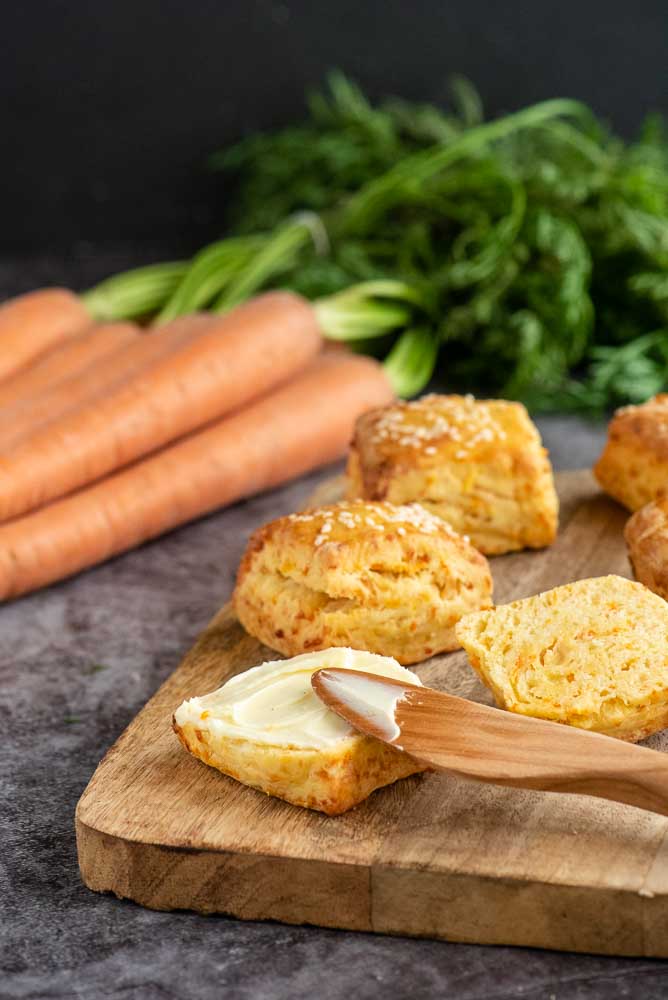
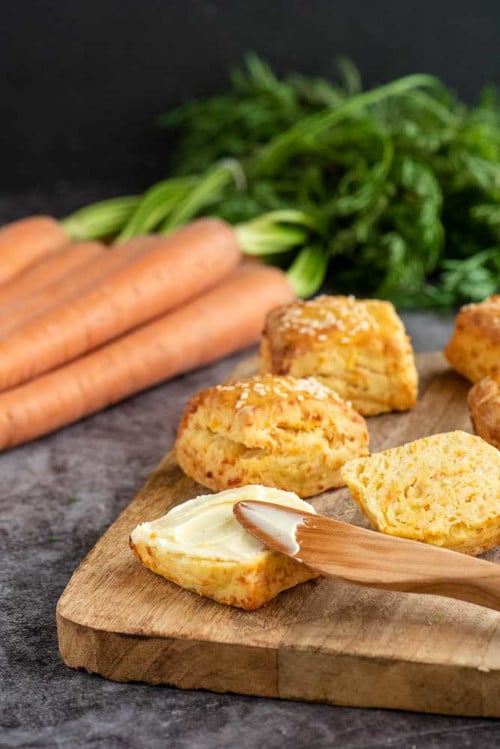
Easy savoury scones made with tahini and carrot, ideal for picnics, parties or serving warm with butter.
Navigate the recipe
On this page
The recipe, step by step
These savoury tahini and carrot scones are quick, easy and packed with flavour. The combination of cheddar, carrot and tahini gives them a lovely soft, crumbly texture with a gently toasted sesame flavour.
They are particularly good straight from the oven while still warm, split open and spread generously with butter. However, they also work brilliantly for picnics and parties, as a savoury afternoon snack or sliced and filled to make little sandwiches.
Because these scones use baking powder rather than yeast, there is no lengthy proving time. The dough comes together in around 10 minutes and the scones bake in just 12–14 minutes. Chilling them briefly before baking also gives the dough time to relax and the butter a chance to firm up again.
For another savoury bake, try my Apricot Stilton Scones or Hungarian Wild Garlic Scones.
Recipe Highlights
- Easy: The dough takes around 10 minutes to prepare.
- Taste: Savoury cheddar and carrot with a warm, nutty sesame flavour from the tahini.
- Texture: Soft and crumbly inside with golden edges.
- Serving: Delicious warm with butter, alongside a meal or split and filled as a sandwich.
- Quantity: 8 scones.
- Preparation: 10 minutes.
- Baking: 12-14 minutes.
- Chilling: 15-20 minutes.
- Total: 37 minutes.
Why You’ll Love These Tahini and Carrot Scones
Scones are one of those bakes that give you a lot of reward for very little work, and these are particularly forgiving.
The grated carrot brings moisture to the dough, while cheddar adds a savoury richness. Tahini gives them something a little different: a subtle toasted sesame flavour that works beautifully with both the carrot and cheese.
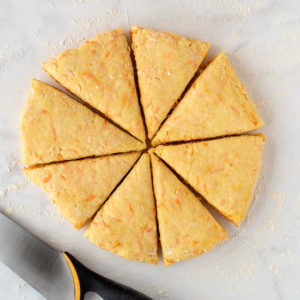
There is also no need to make perfectly round scones. In fact, I often prefer simply rolling the dough into a circle and cutting it into eight wedges. It is quicker, creates less waste and means there is no repeated rolling of the dough.

Ingredients and Substitutions
- Self-raising or plain flour: Use 375 g self-raising or plain flour (all-purpose), plus a little extra for dusting. Either works for this recipe.
- Baking powder: Add 1 teaspoon baking powder. It provides extra lift and is included whether you use plain or self-raising flour.
- Fine sea salt: Use ½ teaspoon fine sea salt. It balances the flavours of the cheese, carrot and tahini.
- Butter: Use 100 g butter. Keep it very cold; I recommend freezing it for 20–30 minutes before you begin and then grating it directly into the flour.
- Cheddar cheese: Use 100 g cheddar cheese, grated. It adds both richness and savoury flavour.
- Carrot: Use 100 g carrot, grated. The carrot adds moisture and a little natural sweetness.
- Tahini: Use 50 g tahini, approximately 4 tablespoons. It gives the scones their distinctive toasted sesame flavour.
- Whole milk: Use 100 ml whole milk, plus a little extra for brushing the tops before baking.
- Egg: Use 1 medium egg, 60 g. It helps bind the dough and contributes to the tender crumb.
- Sesame seeds: Use 1 tablespoon sesame seeds, if you like, to scatter over the tops before baking.
How to Make Tahini and Carrot Scones
1. Chill the butter: Place the butter in the freezer for 20–30 minutes before you begin. Very cold butter is much easier to work into the flour without it becoming overly soft.
2. Prepare the baking tray: Line a large baking tray with baking paper or a silicone baking mat.
3. Combine the dry ingredients: Add the flour, salt and baking powder to a medium mixing bowl. Grate the cold butter directly into the bowl.
4. Rub in the butter: Using your fingertips, gently rub the butter into the flour until the mixture resembles breadcrumbs. This should take around 1–2 minutes. Don’t worry if a few small pieces of butter remain.
5. Add the carrot and cheese: Grate the carrot and cheddar cheese, add them to the flour mixture and stir until evenly distributed.
6. Add the wet ingredients: Make a well in the centre of the flour mixture, then add the milk, egg and tahini.
7. Bring the dough together: Gently combine everything until it forms a dough ball. Avoid kneading or working it unnecessarily.
8. Flour the work surface: Lightly dust a clean work surface with flour and turn the dough onto it.
9. Roll the dough: Using a lightly floured rolling pin, gently roll the dough into a circle approximately 3 cm / 1 inch thick.
10. Cut the scones: The easiest method is to take a large knife and divide the circle into 8 triangular wedges. This avoids re-rolling the dough and therefore reduces the amount it is handled.
Alternatively, cut the dough into squares or use a 6 cm / 3-inch biscuit cutter. Dip the cutter in flour between each scone and press it straight down through the dough without twisting.
11. Re-roll any scraps: When using a biscuit cutter, gently bring the remaining pastry together, roll it back to approximately 3 cm thick and continue cutting until all the dough has been used.
12. Transfer to the tray: Arrange the prepared scones on the lined baking tray.
13. Preheat the oven: Heat the oven to 200°C / 180°C fan / 400°F / Gas 6.
14. Chill the scones: Optionally, place the prepared scones in the fridge for 15–20 minutes before baking. This gives the dough time to relax and allows the butter to become cold again.
15. Brush the tops: Brush the scones with a little milk or whisked egg, then scatter over the sesame seeds, if using.
16. Bake: Bake for 12–14 minutes, until the scones have risen and are golden.
17. Serve: Remove from the oven and either serve immediately with butter or transfer to a wire rack to cool.

Variations
Bacon and Cheddar
Leave out the carrot and tahini and add 100 g cooked streaky bacon instead.
Feta and Walnut
Leave out the carrot, tahini and cheddar and replace them with 80 g chopped walnuts and 150 g diced feta cheese.
Parsnip or Celeriac
Leave out the tahini and replace the grated carrot with grated parsnip or celeriac.
Nigel’s Recipe Tips
Keep Everything Cold
Cold butter is one of the keys to a good scone. Because your fingertips warm the butter while it is being rubbed into the flour, I like to freeze the butter for 20–30 minutes before starting and grate it while it is still very cold.
Don’t Overwork the Dough
Once the liquid ingredients have been added, handle the dough as little as possible. Repeated kneading develops the gluten in the flour, which can make the finished scones tougher rather than soft and crumbly.
Cut Them Into Wedges
Cutting one round of dough into eight triangles is probably the simplest method. It also means there are no scraps to gather together and re-roll, so the dough receives much less handling.
Don’t Twist a Biscuit Cutter
When making round scones, press the cutter firmly and directly down through the dough. Twisting the cutter can compress the edges and interfere with the way the scone rises.
Chill Before Baking
A short chill gives the dough time to relax while also firming the butter again. This can help the scones retain their shape and bake with a tender, crumbly texture.
Serve Them Warm
These scones are particularly good while still slightly warm from the oven with plenty of butter.

Frequently Asked Questions
Can I Use Plain Flour Instead of Self-Raising Flour?
Yes. Use the same 375 g quantity of plain flour and include the 1 teaspoon baking powder in the recipe.
Do I Still Add Baking Powder With Self-Raising Flour?
Yes. The recipe uses 1 teaspoon baking powder even when self-raising flour is used.
Why Do You Freeze the Butter First?
Very cold butter is easier to grate and remains in small pieces throughout the dough rather than melting into the flour. That helps keep the finished scones tender and crumbly.
Do I Have to Chill the Scones Before Baking?
The chill is optional in the preparation, although resting them for 15–20 minutes gives the dough time to relax and allows the butter to firm up again. Can I Make Round Scones Instead?
Yes. Use a 6 cm / 3-inch biscuit cutter and press directly through the dough without twisting.
Can I Make the Scones Ahead?
Yes. The unbaked, shaped scones can be frozen and baked directly from frozen when required.
Tools You’ll Need
- Large baking tray
- Baking paper or silicone baking mat
- Medium mixing bowl
- Grater
- Rolling pin
- Large knife or 6 cm / 3-inch biscuit cutter
- Pastry brush
- Wire cooling rack
- Digital kitchen scales

Storage and Freezing
Storing
These scones are at their best fresh and slightly warm.
Once completely cool, place them in an airtight container and keep at room temperature for up to 3 days. They will gradually become drier as they are stored.
Freezing Baked Scones
Once baked and completely cooled, place the scones in a freezer-safe container and freeze for up to 3 months.
Thaw at room temperature and warm them gently in the oven before serving.
Freezing Unbaked Scones
You can also freeze the shaped scones before baking.
Once required, bake them directly from frozen at 200°C / 180°C fan / 400°F / Gas 6 for approximately 25 minutes, or until risen and golden.
Nutrition
Serving: one scone
Calories: 378.25 kcal · 19% DV
Total Fat: 19.96 g · 29% DV
Carbohydrates: 39.49 g · 15% DV
Sugars: 1.4 g · 2% DV
Protein: 10.56 g · 21% DV
Sodium: 279.71 mg · 14% DV
Fibre: 2.29 g · 8% DV
% Daily Values are based on a 2,000-calorie diet.
Nutrition information is provided as an estimate and may vary depending on the ingredients and portion size used.
Tahini & Carrot Scones
INGREDIENTS LIST
- 375 g self-raising or plain flour (all-purpose) (plus extra for dusting)
- 1 tsp baking powder
- 1/2 tsp fine sea salt
- 100 g butter (see notes)
- 100 g cheddar cheese
- 100 g carrot (grated)
- 50 g tahini (4 tbsp)
- 100 ml whole milk (plus extra for brushing the tops)
- 1 medium eggs (60g each)
- 1 tbsp sesame seeds (optional)
Preparation
- I recommend freezing your butter for 20-30 minutes, prior to starting. *See notes.
- Line your large baking tray with baking paper or a silicon mat.
- Into a medium mixing bowl, add the flour, salt, baking powder and grate the cold butter.
- Use your fingertips to rub the butter into the flour until it resembles breadcrumbs. This should take around 1-2 minutes. Don't worry if a few small lumps remain.

- Grate the carrot and cheddar cheese, then add them to the flour mixture. Give them a good stir to make sure they are well mixed in.
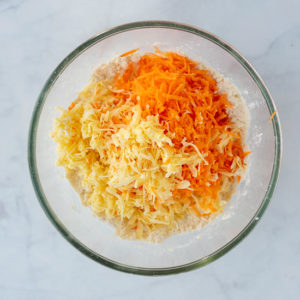
- Make a well in the centre of the flour mix, then add in the milk, egg and tahini.

- Gently bring the whole mixture together to form a dough ball. Dust a clean kitchen work surface with flour and turn out the ball onto it.
- Using a floured rolling pin gently roll the ball out into a circle 3cm (1 inch) high.
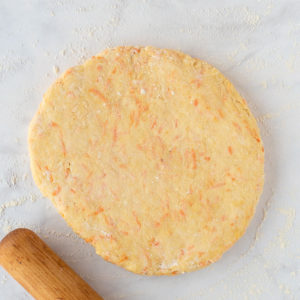
- Now it is time to cut out your scones and there are a couple of methods you can use. The easiest by far is to take a large knife and cut the dough into 8 triangular pieces. This method means you don't have to fiddle re-rolling the dough and avoids overworking it.Using a knife, you can also cut out alternative shapes, such as squares, as you can see in some of the pictures on the blog. The last method is the classic biscuit cutter version. Dip a 6 cm (3 inch) biscuit cutter in flour and cut out 8 scones from the dough. Clean and flour the cutter every time you cut out rounds. (To cut out the scone rounds, press the cutter straight down into the dough without any twisting motion.)
- Bring any leftover dough back into a ball and re-roll to a 3 cm thickness and cut out more rounds, until all the dough has been used up.
- Place the scones onto your prepared baking tray.

- Preheat your oven to 200°C / 180°C fan / 400°F / Gas 6Optional step is to chill the scones for 15-20 minutes to allow the dough to relax.
- Brush the tops of the scones with whisked egg or a little milk. Then sprinkle with sesame seeds if using.
- Baking: Place in oven and bake for 12-14 minutes, until risen and golden.
- Remove from oven and serve immediately with butter or cool on a wire rack.

Notes & Tips
FROM MY KITCHEN TO YOURS
Made this recipe?
I would love to hear how it turned out. Leave a comment and add a star rating to help other home cooks discover the recipe.

A recipe worth keeping
Save this recipe for another day
Pin it to one of your boards and keep it close for the next time you are ready to cook or bake.
Save to PinterestKeep cooking
You may also like
 Recipe
Chocolate Chia Pudding
A creamy vegan chocolate chia pudding topped with rich hazelnut fudge sauce for a simple, satisfying dessert or breakfast.
View recipe Recipe
Coffee & Walnut Loaf Cake
A moist coffee and walnut loaf cake finished with a smooth espresso and vanilla glaze.
View recipe Recipe
Lemon Drizzle Cake
A moist buttery sponge soaked with bright lemon syrup and finished with a sweet citrus glaze.
View recipe
Around the table
Questions and kitchen notes
Made this recipe? Leave a rating and tell me how it turned out. Your questions and tips may also help the next person making it.