
From Nigel's Kitchen Table
Super-Easy Vanilla Cupcakes
Tender vanilla cupcakes with a moist buttery crumb, perfect for decorating for birthdays, Easter and celebrations.
Navigate the recipe
On this page
The recipe, step by step
These super-easy vanilla cupcakes are tender, moist and full of buttery vanilla flavour. They come together in just 25 minutes, making them perfect when you want a reliable homemade cupcake without lots of fuss.
The recipe is also a brilliant way to use up leftover egg whites. Rather than whole eggs, the batter uses two egg whites, which helps give the cupcakes a lovely light crumb, while natural yoghurt keeps them soft and moist.
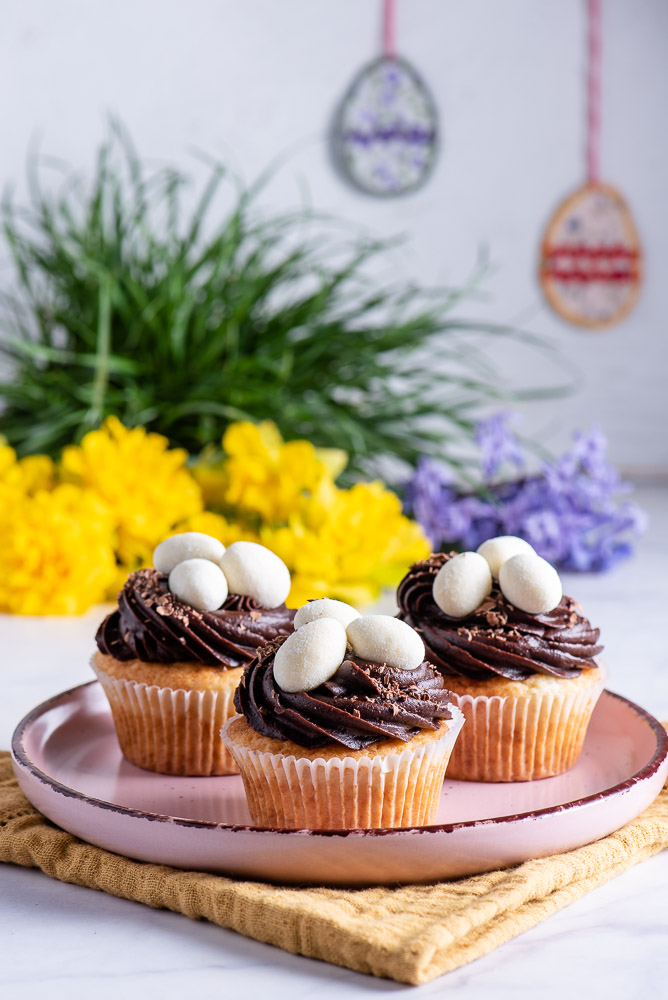
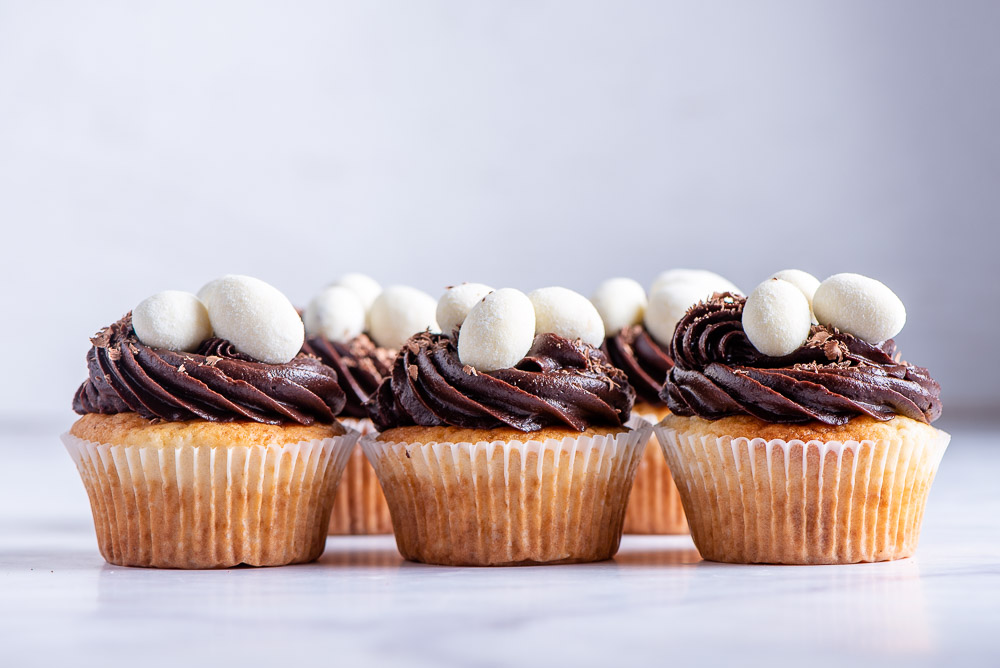
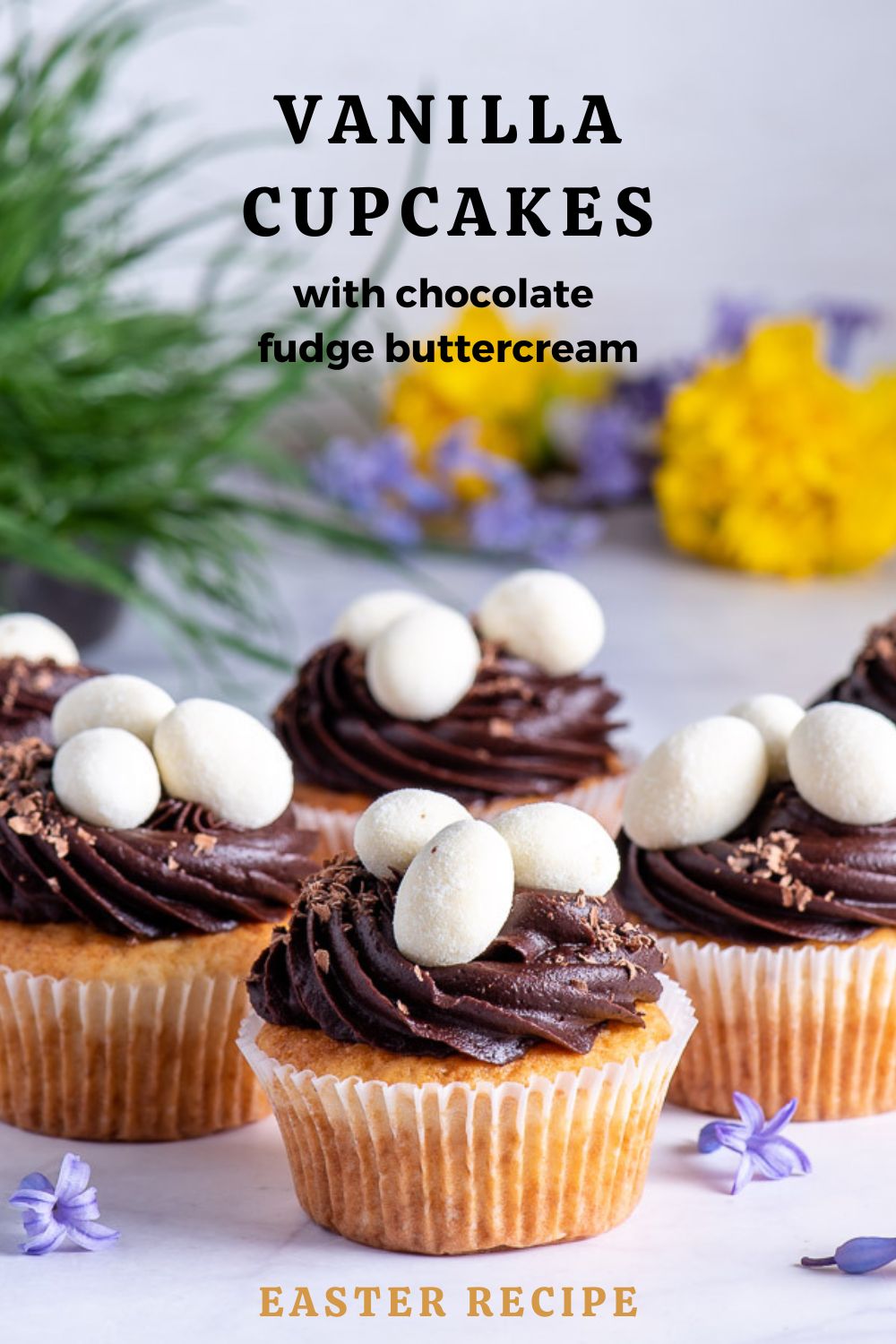
I originally decorated these for Easter with chocolate fudge buttercream and mini chocolate eggs, but the basic vanilla cupcake works for almost any occasion. Change the frosting, add fresh fruit, fill them with jam or simply enjoy them as they are.
Recipe Highlights
- Ease: Very easy and made using a simple wet-and-dry mixing method.
- Taste: Buttery with plenty of vanilla flavour.
- Texture: Light, tender and moist.
- Serving: Lovely plain or topped with your favourite frosting. I used chocolate fudge buttercream for the Easter version.
- Quantity: 10 cupcakes.
- Preparation: 5 minutes.
- Baking: 20 minutes.
- Total: 25 minutes.
- Cupcake cases: Approximately 5 cm across the base × 4 cm high.
Why You’ll Love These Vanilla Cupcakes
This is exactly the sort of cupcake recipe I like to keep in my repertoire because it is quick, uncomplicated and easy to adapt.
There is no lengthy creaming stage. Instead, the melted butter, milk, yoghurt, vanilla and egg whites are whisked together before being added to the dry ingredients.
Natural yoghurt is particularly useful here. Its acidity works with the bicarbonate of soda while also contributing moisture, helping create a soft and tender crumb.
The recipe is intentionally not overly sweet either, which leaves plenty of room for buttercream, jam, fruit or other toppings without the finished cupcake becoming cloying.
And because they bake in around 18–20 minutes, you can have a fresh batch ready surprisingly quickly.

Ingredients and Substitutions
Dry Ingredients
- Plain flour: Use 135 g plain flour, also known as all-purpose flour. Weighing the flour with digital scales gives the most reliable result.
- Caster sugar: Use 100 g caster sugar. Its fine crystals dissolve easily into the batter and provide sweetness without making these cupcakes overly sugary.
- Bicarbonate of soda: Use ¼ teaspoon bicarbonate of soda, also called baking soda. The natural acidity in the yoghurt helps activate it.
- Baking powder: Use 1 teaspoon baking powder for additional lift.
- Fine sea salt: Use 1 pinch fine sea salt. It balances the sweetness and helps the vanilla and butter flavours stand out more clearly.
Wet Ingredients
- Butter: Use 100 g butter, melted. It gives these cupcakes their rich buttery flavour.
- Milk: Use 80 g milk. The old article recommends whole milk for its richer crumb, although WPRM itself simply lists milk.
- Natural yoghurt: Use 80 g natural yoghurt. It contributes moisture while its acidity works with the bicarbonate of soda.
- Vanilla: Use 1 teaspoon pure vanilla extract or ¼ teaspoon vanilla paste.
- Egg whites: Use 2 medium egg whites, 60 g in total, at room temperature. They help create a light cupcake while making this recipe particularly useful when you have egg whites left over from another recipe.
Decoration
- Chocolate fudge buttercream: 1 recipe of chocolate fudge buttercream for decorating the cupcakes.
- Mini chocolate Easter eggs: Use 1 bag, if you are making the Easter version. They are optional.
Nigel recommends
Vanilla Bean Paste
Vanilla bean paste works beautifully in these cupcakes, giving the sponge a rich, rounded vanilla flavour and visible vanilla seeds while only requiring a small amount.
 Ingredient
Nielsen Massey
Vanilla Bean Paste
Rich vanilla bean paste with a concentrated vanilla flavour and visible vanilla seeds, ideal for cakes, biscuits, custards, creams and glazes.
Some retailer links may be affiliate links. Recommendations remain editorially independent.
How to Make Super-Easy Vanilla Cupcakes
Make the Cupcakes
1. Prepare the oven and tin: Preheat the oven to 180°C / 160°C fan / 350°F / Gas 4. Line a muffin tray with cupcake cases.
2. Combine the dry ingredients: In a large mixing bowl, sift together the 135 g flour, 100 g caster sugar, ¼ teaspoon bicarbonate of soda, 1 teaspoon baking powder and pinch of fine sea salt.
3. Combine the wet ingredients: Melt the 100 g butter over low heat or in the microwave. Place it in another mixing bowl with the 80 g milk, 80 g natural yoghurt, vanilla and 2 egg whites. Make sure the wet ingredients are warm rather than hot when the egg whites are added. Whisk until combined.
4. Make the batter: Pour the wet ingredients into the dry ingredients and mix until just combined. Be careful not to overmix the batter.
5. Fill the cupcake cases: Divide the batter evenly between the cupcake cases, filling each approximately two-thirds full. I use a large cookie scoop, which works out at roughly 3 tablespoons of batter per cupcake.
6. Bake: Place the cupcakes in the centre of the oven and bake for approximately 18–20 minutes, until the centres spring back lightly when touched and a toothpick inserted into the middle comes out clean.
7. Cool: Leave the cupcakes in the muffin tray for 2 minutes, then transfer them to a wire cooling rack and leave them to cool completely.
8. Finish the cupcakes: Once completely cool, decorate them with your chosen frosting, or serve them with fresh berries or jam and cream.
Decorating Cupcakes
9. Decorate with a piping bag: Starting at the outside edge of the cupcake, pipe the frosting in a spiral towards the centre. Lift the piping tip slightly as you finish in the middle.
10. Decorate without a piping bag: Place approximately 2 tablespoons frosting on top of each cupcake. Using the back of a spoon, a non-serrated butter knife or a small offset spatula, spread the frosting towards the edge. Create a simple swoop by working in a spiral from the outside towards the centre.

Variations
The basic vanilla cupcake is deliberately simple, which makes it a very good base for experimenting with flavours and decorations.
Add Sprinkles
Fold colourful sprinkles into the batter or scatter them over the frosting.
They are one of the easiest ways to adapt these cupcakes for birthdays and celebrations.
Add Fresh or Frozen Fruit
Small pieces of soft fruit or berries can be folded into the batter.
Dust the fruit lightly with flour first, then fold it through gently at the end so you do not crush the fruit and colour the batter unnecessarily.
Add Freeze-Dried Fruit
Add 15–20 g freeze-dried fruit powder with the flour.
This is an easy way to introduce concentrated fruit flavour without adding much additional moisture.
Add Dried Fruit
Try:
- Currants
- Sultanas
- Medjool dates
- Dried cranberries
- Dried pineapple
I like to plump dried fruit before baking. Pour boiling water over it while you prepare the remaining ingredients, then drain thoroughly, dust lightly with flour and fold it into the finished batter.
Add Citrus
Add finely grated orange or lemon zest for a fresh citrus variation.
Change the Extract
Add 1 teaspoon coconut extract or almond extract instead of, or alongside, the vanilla.
Add Chocolate
Fold 100 g chopped chocolate or chocolate chips through the batter.
Make Coffee Cupcakes
Stir 1 teaspoon instant coffee into the warm melted butter and milk mixture before combining it with the remaining wet ingredients.
Add Nuts
Fold in 80 g toasted chopped pecans, walnuts, almonds or hazelnuts.
Add Warm Spices
Experiment with:
- Cinnamon
- Cloves
- Cardamom
- Allspice
Pumpkin Spice or Chai
Add 1 teaspoon pumpkin spice or chai spice with the vanilla for an easy autumn variation.
Frosting Ideas
Chocolate fudge buttercream is used for the Easter cupcakes shown here, but these vanilla cupcakes work with plenty of other frostings.
Chocolate Fudge Buttercream
A rich chocolate frosting is a particularly good contrast with the light vanilla sponge.
Vanilla Buttercream
Keep things classic with a simple vanilla buttercream.
Jam and Cream
Skip the buttercream entirely and serve the cupcakes with a little jam and softly whipped cream.
Fresh Fruit
Fresh berries make a simple topping, either on their own or arranged over a swirl of buttercream.
Nigel’s Recipe Tips
Bring the Ingredients to Room Temperature
The milk, yoghurt and egg whites should be at room temperature before mixing.
Even though the butter is melted, starting with room-temperature ingredients helps everything combine more smoothly.
Don’t Add the Egg Whites to Hot Butter
After melting the butter, allow it to cool enough that the wet mixture is warm rather than hot before adding the egg whites.
This is specifically noted in the WPRM method.
Don’t Overmix
Once you add the wet ingredients to the flour mixture, mix only until everything has come together.
Overmixing can produce a denser cupcake and can contribute to sunken centres.
Fill the Cases Two-Thirds Full
Avoid filling the cases right to the top.
Approximately two-thirds full gives the cupcakes enough room to rise without spilling over the edges.
Use a Cookie Scoop
A large cookie scoop makes it much easier to divide the batter evenly.
Each cupcake uses approximately 3 tablespoons of batter.
Check Them From 18 Minutes
Ovens vary, so start checking the cupcakes at the lower end of the 18–20 minute range.
They are ready when the centre springs back lightly and a toothpick comes out clean.
Don’t Leave Them in the Tin
Let the cupcakes rest for only 2 minutes in the muffin tray after baking.
Then transfer them to a cooling rack so they can cool evenly without continuing to steam inside the tin.
Cool Completely Before Frosting
This is essential.
Buttercream placed on a warm cupcake will soften or melt, so allow the cakes to become completely cool first.
Frequently Asked Questions
Can I Use Oil Instead of Butter?
Yes, a neutral oil such as vegetable or sunflower oil as a lighter alternative.
Why Did My Cupcakes Sink?
One possible cause is overmixing the batter.
Mix only until the wet and dry ingredients are combined and avoid vigorously beating the finished batter.
Can I Add Fruit?
Yes. Small pieces of soft fruit or berries can be folded gently through the batter.
Dust them lightly with flour first.
Can I Make These Cupcakes Ahead?
Yes.
The existing article specifically notes that the cupcakes can be made ahead.
For the best texture, store them appropriately and allow chilled cupcakes to return to room temperature before serving.
How Do I Know When They Are Baked?
They should spring back when lightly touched in the centre, and a toothpick inserted into the middle should come out clean.
This normally takes 18–20 minutes.
Tools You’ll Need
- Muffin or cupcake tray
- Cupcake cases
- Two mixing bowls
- Whisk
- Silicone spatula
- Digital kitchen scales
- Large cookie scoop, optional
- Wire cooling rack
- Piping bag, optional
- Piping nozzle, optional
- Small offset spatula, optional
Storage and Freezing
Storing
These cupcakes are best served at room temperature.
Store leftovers in an airtight container in the refrigerator for 3–4 days, then allow them to come back to room temperature before serving.
Freezing
Unfrosted cupcakes can be frozen.
Allow them to cool completely, then place them in an airtight freezer-safe container or zip-lock freezer bag.
If wrapping the cupcakes individually in cling film, place a small piece of baking parchment over the tops first. This helps prevent the cake surface from sticking to the plastic.
Defrost frozen cupcakes overnight in the refrigerator, then allow them to return to room temperature before serving or frosting.
Nutrition
Serving: One cupcake without frosting.
Calories: 174.12 kcal · 9% DV
Total Fat: 8.77 g · 13% DV
Carbohydrates: 21.28 g · 8% DV
Sugars: 10.88 g · 12% DV
Protein: 2.75 g · 5% DV
Sodium: 100.17 mg · 5% DV
Fibre: 0.37 g · 1% DV
% Daily Values are based on a 2,000-calorie diet.
Nutrition information is provided as an estimate and may vary depending on the ingredients, brands and portion size used.

Super-Easy Vanilla Cupcakes
INGREDIENTS LIST
Dry ingredients
- 135 g plain flour (all-purpose)
- 100 g caster sugar
- ¼ tsp bicarbonate of soda / baking soda
- 1 tsp baking powder
- 1 pinch of fine sea salt
Wet ingredients
- 100 g butter (melted)
- 80 g milk
- 80 g natural yoghurt
- 1 tsp pure vanilla extract or 1/4 tsp of vanilla paste
- 2 medium egg whites (at room temperature, 60g total )
Decoration
- 1 recipe of chocolate fudge buttercream (see notes blog post or notes for recipe)
- 1 bag mini chocolate Easter eggs (optional)
Preparation
- Preheat oven to 180°C / 160°C fan / 350°F / gas 4. Line a muffin tray with cupcake cases.
Cupcakes
- In a large mixing bowl, sift the flour, sugar, salt, baking soda and powder.
- Melt the butter over a low heat or in a microwave, then add it to another mixing bowl with the milk, yoghurt, vanilla and egg whites. (Make sure the wet ingredients are warm but not hot when adding the egg whites.) Whisk together the wet ingredients until combined.
- Add the wet ingredients to the dry ingredients and mix until combined, but be careful to not over mix the batter.
- Distribute the batter evenly into the cupcake cases, filling each case until about 2/3 full. I use a large cookie scoop. (It’s about 3 tablespoons of batter per cupcake.)
- Baking: Place the cupcakes in the middle of the oven and bake for about 18-20 minutes or until the centers are springy to the touch and a toothpick comes out clean.
- Rest the cupcakes for just 2 minutes in the muffin tray to allow them to cool slightly, then remove them and place them on a wire rack to cool completely.
- Cool completely before icing with the frosting of your choice (see blog post for ideas), fresh berries or jam and cream.
Decorating cupcakes
- Using a pastry bag: Starting on the outside edge of the cupcake, pipe the frosting in a swirl drawing towards the centre as you pipe around. Lift the tip up slightly as you finish the centre.
- Using a knife or offset spatula: Place 2 tablespoons of frosting on top of the cupcake. Use the back of a spoon, a non-serrated butter knife, or a small offset spatula to spread it to the edge. Use your spoon or knife to create a swoop by making a spiral pattern from the outside edge to the centre of the cupcake.
FROM MY KITCHEN TO YOURS
Made this recipe?
I would love to hear how it turned out. Leave a comment and add a star rating to help other home cooks discover the recipe.
A recipe worth keeping
Save this recipe for another day
Pin it to one of your boards and keep it close for the next time you are ready to cook or bake.
Save to PinterestKeep cooking
You may also like
 Recipe
Chocolate Chia Pudding
A creamy vegan chocolate chia pudding topped with rich hazelnut fudge sauce for a simple, satisfying dessert or breakfast.
View recipe Recipe
Lemon Crinkle Cookies
Soft lemon crinkle cookies with snowy cracked tops and a bright, refreshing citrus flavour.
View recipe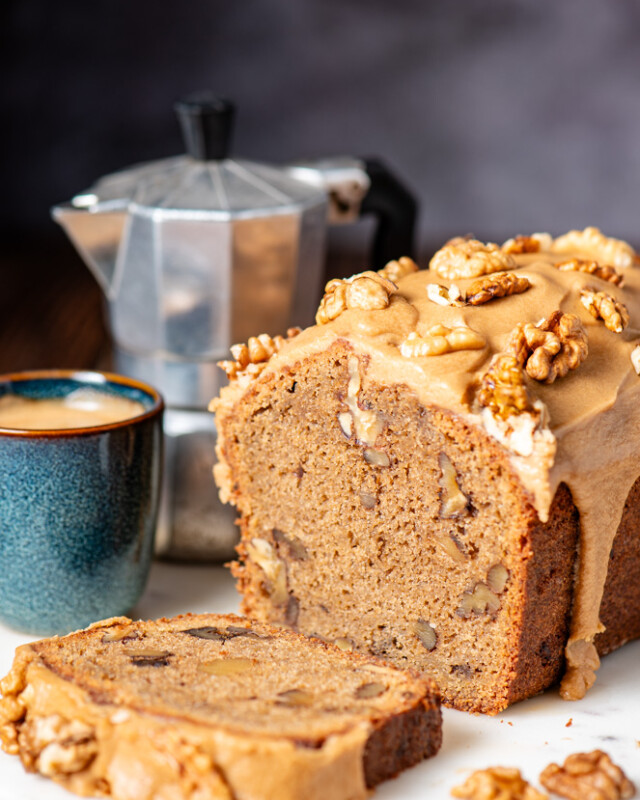 Recipe
Coffee & Walnut Loaf Cake
A moist coffee and walnut loaf cake finished with a smooth espresso and vanilla glaze.
View recipe
Around the table
Questions and kitchen notes
Made this recipe? Leave a rating and tell me how it turned out. Your questions and tips may also help the next person making it.