
From Nigel's Kitchen Table
English Muffins
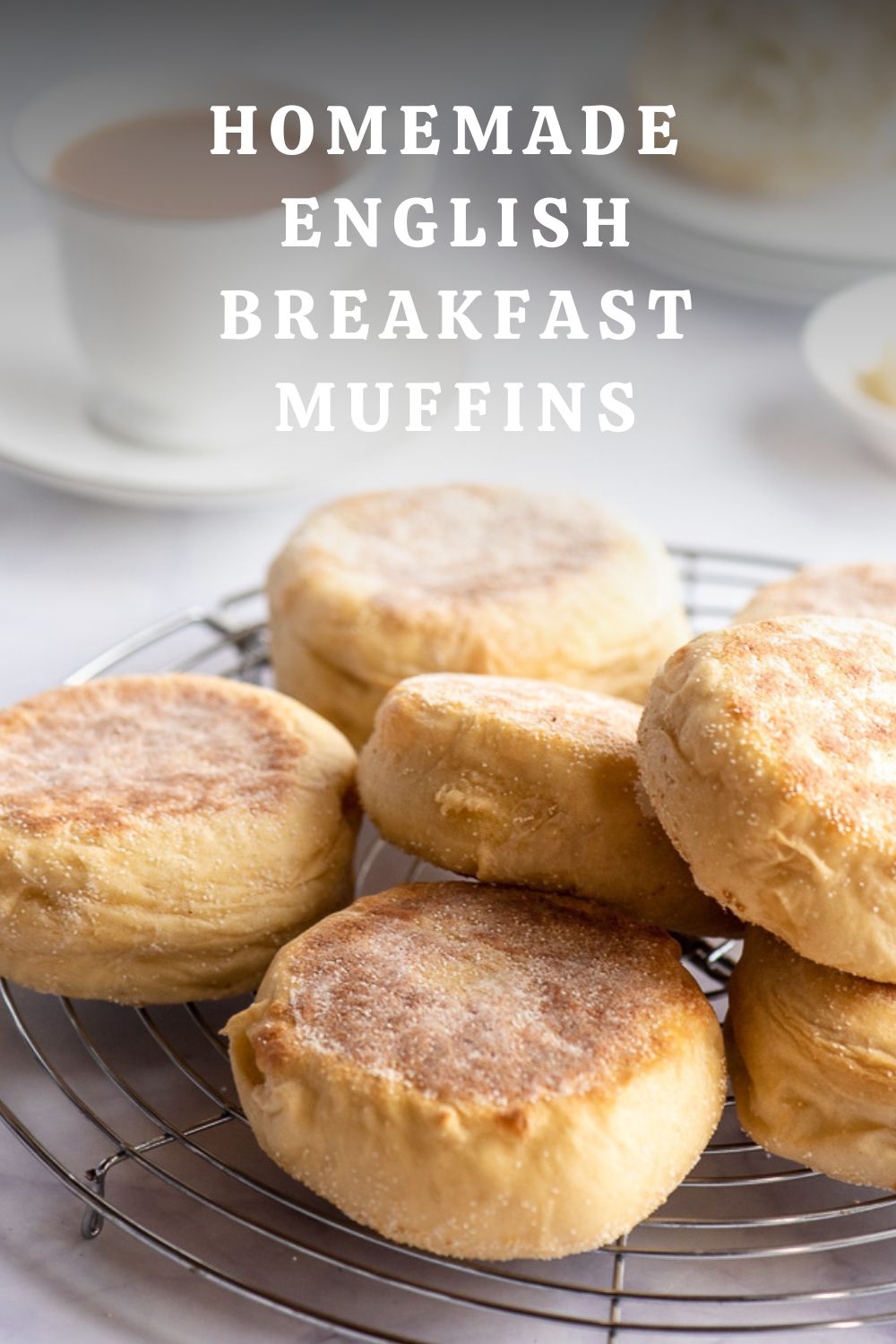
Soft homemade English muffins with a lightly crisp exterior, perfect toasted with butter and jam or filled for breakfast.

Navigate the recipe
On this page
The recipe, step by step
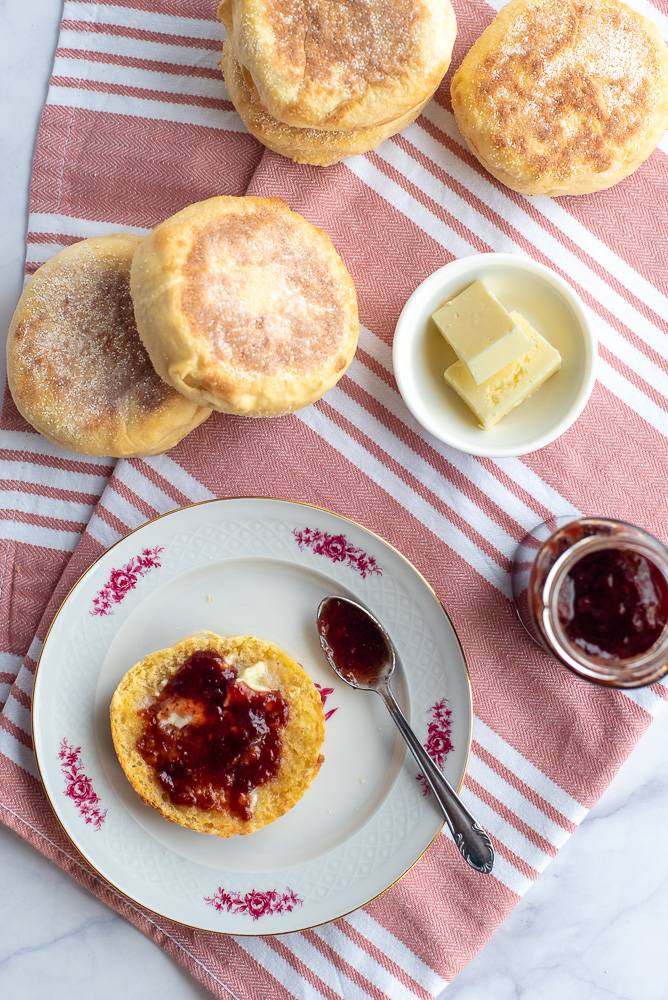
My homemade English muffins are one of my favourite breakfasts. They are soft and springy inside with that characteristic lightly browned exterior, and they are especially good split, toasted and generously spread with butter and jam.
They are also surprisingly straightforward to make. The dough needs time to prove, but the actual hands-on work is simple. Browning them first in a covered frying pan gives them their familiar flat shape and toasted surface before a short finish in the oven cooks the centres through.
For a savoury breakfast, fill them with ham and eggs, or keep things simple with butter, marmalade or jam. For more homemade breakfast ideas, try my Maple Date Banana Bread or Nutella and Hazelnut Buns.
Recipe Highlights
- Easy homemade bread: The method is simple, although the dough needs time to prove properly.
- Soft, springy crumb: A fairly wet dough gives the muffins their characteristic soft interior.
- Toasted exterior: Browning them in a frying pan before baking produces their distinctive English muffin finish.
- Perfect for breakfast: Split and toast them, then serve with butter and jam or use them for breakfast sandwiches.
- Makes: 8 English muffins.
- Preparation: 20 minutes.
- Baking: 20 minutes.
- Proving: 1 hour 40 minutes.
- Total: 2 hours 20 minutes.
Ingredients and Substitutions
- Whole milk: Use 250 ml whole milk. Its extra richness gives the muffins a softer texture and fuller flavour.
- Yeast: Use 15 g fresh yeast or 5 g dried yeast. The milk should be gently warmed before the yeast is added.
- White bread flour: Use 400 g white bread flour, plus a little extra for dusting the work surface. Avoid adding unnecessary flour while kneading because the dough is deliberately fairly sticky.
- Fine sea salt: Use 1 teaspoon fine sea salt (5 g). It seasons the dough and balances the small amount of sugar.
- Caster sugar: Use 1 teaspoon caster sugar (5 g). It adds just a hint of sweetness to the dough.
- Egg: Use 1 medium egg, lightly beaten. It enriches the dough and helps give the muffins their soft texture.
- Butter: Use 50 g softened butter. Add it after the initial kneading and continue kneading until it has been completely absorbed.
- Fine semolina flour: Use 30 g fine semolina flour for dusting, if desired. It helps prevent sticking while also giving the outside of the muffins their familiar slightly grainy finish.
How to Make English Muffins
1. Warm the milk: Gently heat the milk in a small saucepan until it reaches approximately 37°C / 98°F. It should feel comfortably warm rather than hot.
2. Activate the yeast: Remove the milk from the heat, stir in the yeast and set it aside for 10 minutes.
3. Combine the dry ingredients: In a large mixing bowl, or the bowl of a stand mixer fitted with a dough hook, combine the flour, salt and sugar. Add the lightly beaten egg.
4. Form the dough: Pour the yeast mixture into the flour mixture and knead for approximately 4 minutes until an elastic dough begins to form. The dough will be sticky, so avoid adding extra flour.
5. Add the butter: Add the softened butter and continue kneading until there are no visible traces of butter remaining. By hand, this stage can be a little messy initially, but the dough will come together after a few minutes.
6. Rest and knead again: Once the butter has been incorporated, leave the dough to rest for 10–15 minutes. Then knead it for another 1 minute until smoother and more elastic.
7. First prove: Cover the bowl with a clean kitchen cloth and leave the dough at room temperature for approximately 1 hour, or until doubled in size.
8. Divide the dough: Dust the work surface with a mixture of semolina and flour. Turn out the dough and divide it into 8 equal pieces. An easy way to do this is to divide the dough into four pieces and then cut each piece in half.
9. Shape the muffins: Shape each piece into a smooth round ball, then gently flatten it into a disc. For a neat, even shape, press each ball into an 8–9 cm (3–4 inch) round biscuit cutter.
10. Second prove: Place the shaped muffins on the semolina-dusted work surface or on a small tray, leaving room between them. Cover and prove for 30–40 minutes.
11. For overnight proving: Alternatively, place the shaped muffins on a semolina-dusted tray and refrigerate overnight. Leave enough space between them for expansion, then bring them out of the fridge and leave them at room temperature for approximately 30 minutes before cooking.
12. Preheat the oven: Heat the oven to 180°C fan / 400°F / Gas 6.
13. Brown the muffins: Heat a large cast-iron skillet or non-stick frying pan with a lid over low-medium heat. Working in batches, cook the muffins for 2–3 minutes on each side, with the lid on, until lightly browned.
14. Transfer to a tray: Move the browned muffins to a baking tray as each batch is finished.
15. Finish in the oven: Once all the muffins have been browned, bake them in the oven for a further 5–6 minutes to cook the centres completely.
Nigel’s Recipe Tips
Keep the dough sticky. Resist the temptation to keep adding flour. The relatively wet dough is what helps create that soft, springy interior.
Watch the milk temperature. The milk should be around body temperature. Milk that is too hot can damage the yeast and prevent the dough from rising properly.
Give the dough its resting time. The short rest after incorporating the butter helps the dough become smoother and more elastic when you knead it again.
Let the first prove finish properly. Rather than relying entirely on the clock, look for the dough to have roughly doubled in size.
Use semolina for shaping. It prevents sticking without working lots of additional flour into the dough.
Do not squash the muffins too thinly. Shape them into even discs, but leave enough depth for them to rise and develop their soft interior.
Use a lid while pan-cooking. Covering the frying pan traps some steam and helps the muffins rise while their surfaces brown.
Keep the heat moderate. The outside needs time to brown without burning before the muffins finish baking in the oven.
Variations
Whole Wheat English Muffins
Replace 200 g of the white bread flour with 180 g whole wheat flour for a more wholesome version.
Cinnamon and Raisin
Add cinnamon and raisins for a gently sweet breakfast muffin.
Cranberry
Dried cranberries can be folded into the dough for a slightly tart fruit variation.
Chocolate Chip
For something sweeter, add chocolate chips to the dough.
Nutty English Muffins
Chopped pecans are another good addition, particularly when serving the muffins toasted with butter.
Frequently Asked Questions
Why Is My English Muffin Dough So Sticky?
It is supposed to be fairly wet and sticky. Adding too much flour will make the finished muffins denser and reduce the soft, springy crumb.
Why Are English Muffins Cooked in a Frying Pan First?
The initial pan-cooking browns both flat surfaces and helps create the characteristic shape and exterior. The short oven bake then cooks the centre completely.
Do I Need a Round Cutter?
No. An 8–9 cm cutter makes shaping particularly neat, but you can simply form and flatten the dough by hand.
Can I Prepare English Muffins the Night Before?
Yes. After shaping, place them on a semolina-dusted tray, cover and refrigerate overnight. Leave them at room temperature for approximately 30 minutes before cooking.
Can I Make Them Without Semolina?
Yes. The semolina is optional and is mainly used for dusting and preventing the dough from sticking.
How Should I Serve English Muffins?
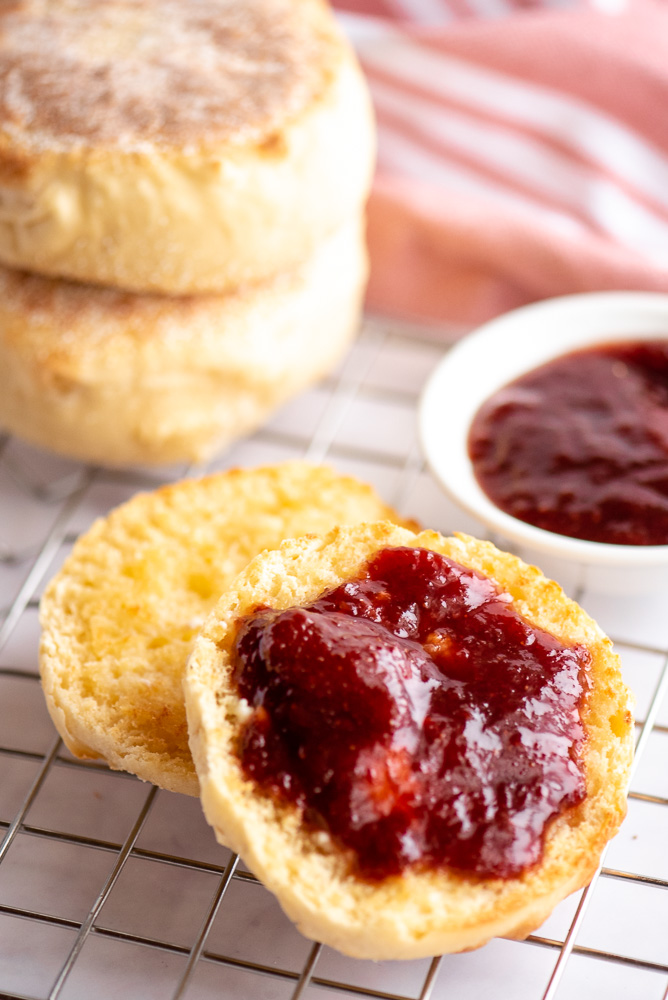
Split them, toast them and serve with butter and jam, marmalade or another favourite spread. They are also excellent filled with ham and eggs for a savoury breakfast.
Tools You’ll Need
- Large mixing bowl
- Stand mixer with dough hook, optional
- Small saucepan
- Digital kitchen scales
- Baking tray
- Baking or parchment paper
- 8–9 cm (3–4 inch) round biscuit cutter, optional
- Large cast-iron skillet or non-stick frying pan with a lid
- Spatula
Storage and Freezing
Storing
Keep the cooled English muffins in a bread bag or airtight container at room temperature for 3–5 days.
They are particularly good split and toasted once they are a day or two old.
Freezing
Freeze the muffins for up to 3 months. Defrost them overnight in the fridge, then split and toast before serving.
Nutrition
Serving: one English muffin
Calories 259.75 kcal (13%)
Total Fat 6.49 g (9%)
Carbs 41.3 g (16%)
Sugars 2.41 g (3%)
Protein 8.27 g (17%)
Sodium 232.92 mg (12%)
Fiber 1.43 g (5%)
% Daily Values based on a 2,000 calorie diet.
Nutrition information is provided as an estimate and may vary depending on the ingredients and portion size used.
English Muffins
INGREDIENTS LIST
- 250 ml whole milk
- 15 g fresh yeast (5g dried yeast)
- 400 g white bread flour (plus extra for dusting worksurface)
- 1 tsp fine sea salt (5g)
- 1 tsp caster sugar (5g)
- 1 medium egg (lightly beaten)
- 50 g butter (softened)
- 30 g fine semolina flour (optional for dusting )
Preparation
- Dough: In a small saucepan, gently heat the milk until it reaches body temperature 37°C/98°F. You should be able to comfortably put your finger in it and hold it there. If it's too hot it will kill the yeast.
- Remove from the heat and stir in the yeast. Set it aside for 10 minutes for the yeast to react.
- In a large bowl (or in a bowl of a stand mixer fitted with a dough hook), combine the flour, salt, sugar and egg.
- Using your hands or a stand mixer, add the yeast mixture to the flour and knead into an elastic dough (4 minutes). The dough will be sticky, but avoid adding extra flour. (see notes)
- When the dough is smooth, add the softened butter and continue to knead until there are no visible traces of butter left. This stage will be a little messy by hand but it will come together after a few minutes. Once the butter has been absorbed, I like to let the dough sit for 10-15 minutes to allow the gluten to develop and then knead for another minute. I find this gives you a much smoother, elastic finish to the dough.
- Cover the bowl with a kitchen cloth and leave to prove at room temperature for an hour or until doubled in size.
- Shaping: Dust the work surface with a mixture of the semolina and flour. Turn out the dough onto the worksurface and divide the dough into eight equal parts. I usually cut the dough ball into 4 and then cut each wedge in half again for simplicity.
- Shape each piece of dough into a round ball, then gently press the ball down (I like to use an 8-9 cm (3-4 inch) biscuit cutter to push the ball dough into, this helps to form a nice even shaped disk).
- If you have the space, you can leave the muffins on the dusted worksurface covered with a kitchen towel to rise for 30-40 minutes or place them on a small tray sprinkled with semolina that fits in your fridge overnight if you want to bake them for breakfast. Ensure to leave some space between them so they can rise and let them come to room temperature for 30 minutes prior to cooking.
- Preheat the oven to 180°C fan / 400°F / Gas 6.
- Baking: Place a large cast-iron skillet or non-stick pan with a lid over a low-medium heat. In batches, brown the muffins for 2-3 minutes each side and then transfer them to a baking tray. Once all the muffins have been browned in the pan, finish baking them in the oven for 5-6 minutes.
Notes & Tips
FROM MY KITCHEN TO YOURS
Made this recipe?
I would love to hear how it turned out. Leave a comment and add a star rating to help other home cooks discover the recipe.
A recipe worth keeping
Save this recipe for another day
Pin it to one of your boards and keep it close for the next time you are ready to cook or bake.
Save to PinterestKeep cooking
You may also like
 Recipe
Chocolate Chia Pudding
A creamy vegan chocolate chia pudding topped with rich hazelnut fudge sauce for a simple, satisfying dessert or breakfast.
View recipe Recipe
Lemon Crinkle Cookies
Soft lemon crinkle cookies with snowy cracked tops and a bright, refreshing citrus flavour.
View recipe Recipe
Coffee & Walnut Loaf Cake
A moist coffee and walnut loaf cake finished with a smooth espresso and vanilla glaze.
View recipe
Around the table
Questions and kitchen notes
Made this recipe? Leave a rating and tell me how it turned out. Your questions and tips may also help the next person making it.