
From Nigel's Kitchen Table
Flaky Pastry
A quick homemade flaky pastry with crisp, light layers, ideal for pies, turnovers, galettes and strudels.
Navigate the recipe
On this page
The recipe, step by step
This quick and easy flaky pastry is light, crisp and full of buttery layers. It is brilliant for pies, galettes, turnovers, strudels and plenty of other sweet or savoury bakes.
Making pastry can feel a little daunting when you first start, but this method is much more approachable than it looks. Once the dough is made, the butter is added gradually as you roll and fold it. Those repeated folds create the thin layers of dough and butter that give flaky pastry its characteristic crisp, delicate texture.
I also like knowing exactly what has gone into my pastry, and homemade is considerably more satisfying than simply reaching for a packet from the supermarket.
This recipe makes one block of pastry, approximately 600 g, which is enough for around two large galettes or pies. Try it with my Apricot Semolina Galette or Apple Rose Tartlets.
Recipe Highlights
- Ease: Easier than traditional puff pastry and very manageable once you understand the folding method.
- Taste: Rich and buttery, with the option of a little sweetness for dessert pastry.
- Texture: Light, crisp and flaky with distinct layers.
- Great for: Pies, galettes, turnovers, strudels and other sweet or savoury pastry recipes.
- Quantity: One block, approximately 600 g.
- Preparation: 15 minutes.
- Chilling: 50 minutes.
- Total: 1 hour 5 minutes.
- Freezer-friendly: The finished pastry can be frozen for later use.
Why You’ll Love This Flaky Pastry
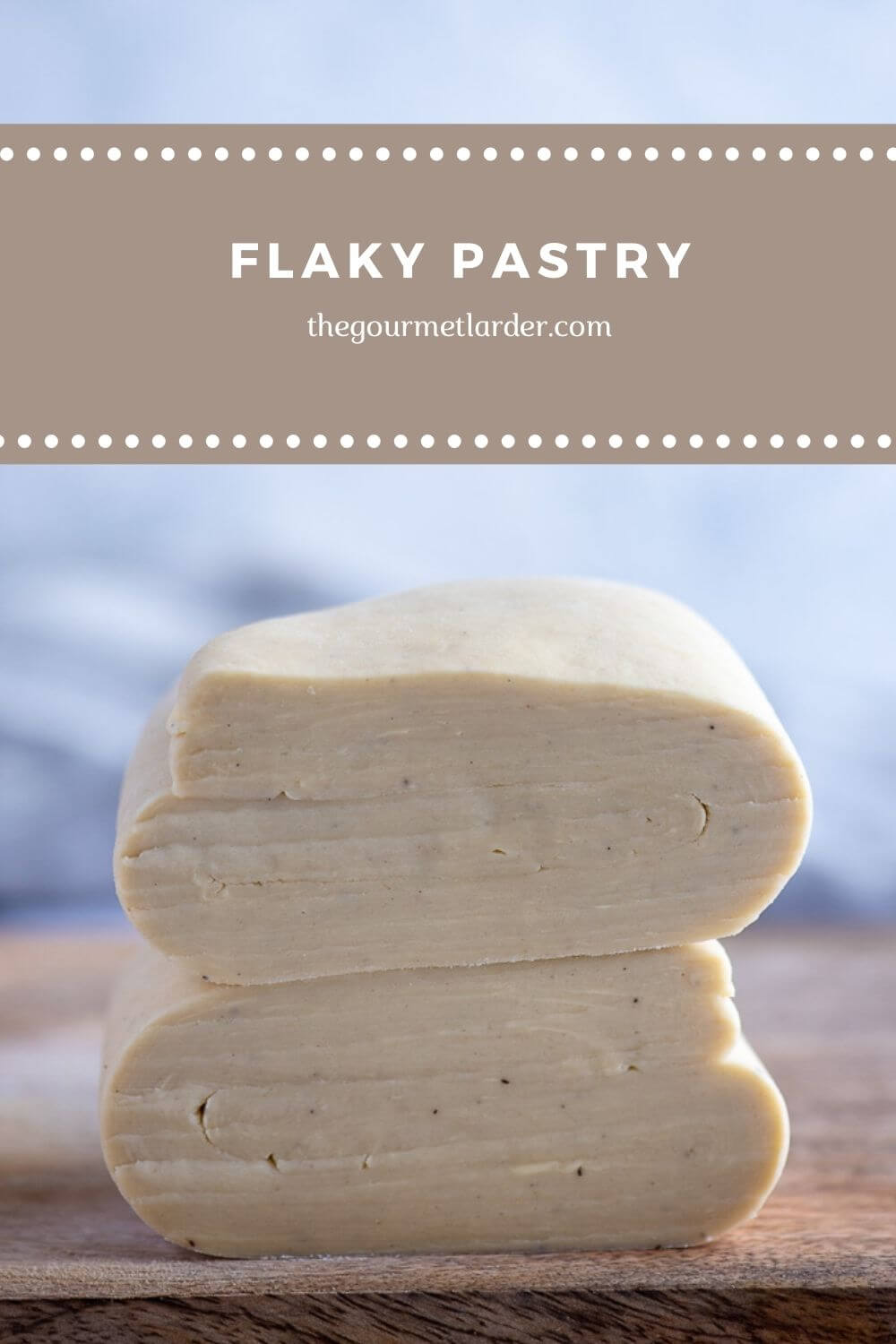
The best thing about this pastry is that you get beautifully flaky layers without needing the more complicated butter-block method used for traditional puff pastry.
Instead, the 200 g of butter is divided into four portions. One portion goes directly into the initial dough, while the remaining butter is added gradually as the pastry is rolled and folded.
Each fold traps thin pieces of butter between layers of dough. As the pastry bakes, the butter melts and the moisture turns to steam, helping separate the layers and giving the pastry its crisp, flaky texture.
It is also a useful recipe to make ahead. Once all the folding is finished, the pastry can sit in the fridge for several days or be frozen until you need it.
Ingredients and Substitutions
- Plain flour: Use 280 g plain or all-purpose flour. It provides the structure needed to create a dough that can be repeatedly rolled and folded.
- Fine sea salt: Use 1 pinch fine sea salt to balance the pastry’s flavour.
- Caster sugar: Use 2 tablespoons caster sugar when making pastry for sweet recipes. Leave it out when making savoury pastry.
- Butter: Use 200 g butter at room temperature. Divide it into four equal portions before you begin. The butter needs to be soft enough to spread between the layers but not melted.
- Water or buttermilk: Use 125 ml water or buttermilk. Water gives you a classic pastry, while buttermilk adds a little extra flavour.
Buttermilk Substitute
For quick buttermilk substitute – add 1.5 teaspoons white vinegar or rice vinegar to 150 ml milk, stirring and leaving it for 15 minutes.
How to Make Flaky Pastry
Make the Dough
1. Divide the butter: Weigh the 200 g butter and divide it into four roughly equal portions.
2. Mix the dry ingredients: Place the 280 g flour, pinch of fine sea salt and 2 tablespoons caster sugar in a medium mixing bowl. Leave out the sugar when making savoury pastry.
3. Add the first portion of butter: Add one-quarter of the butter to the flour mixture and work it into the flour.
4. Add the liquid: Pour in the 125 ml water or buttermilk and bring everything together into a soft dough.
5. Chill the dough: Shape the dough into a ball, flatten it slightly and wrap it in cling film. Refrigerate for 20 minutes. This resting time allows the flour to absorb the liquid and helps the dough relax, making it easier to roll.
Roll and Fold the Pastry
6. Roll the dough: Lightly flour your work surface and roll the chilled dough into a rectangle approximately 3–4 mm thick.
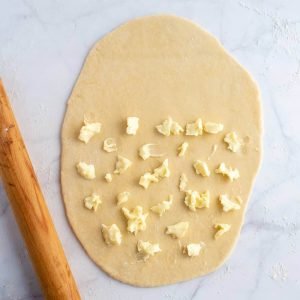
7. Add the butter: Take one of the remaining portions of softened butter and dot or spread it evenly over approximately two-thirds of the rectangle.
The butter should be soft and at room temperature, but not melted.
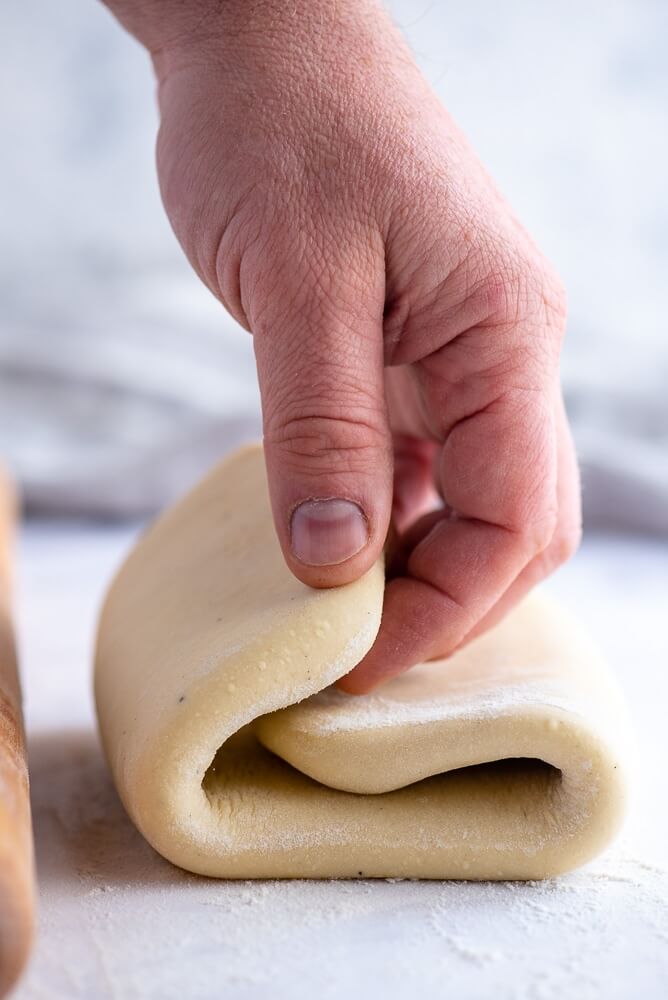
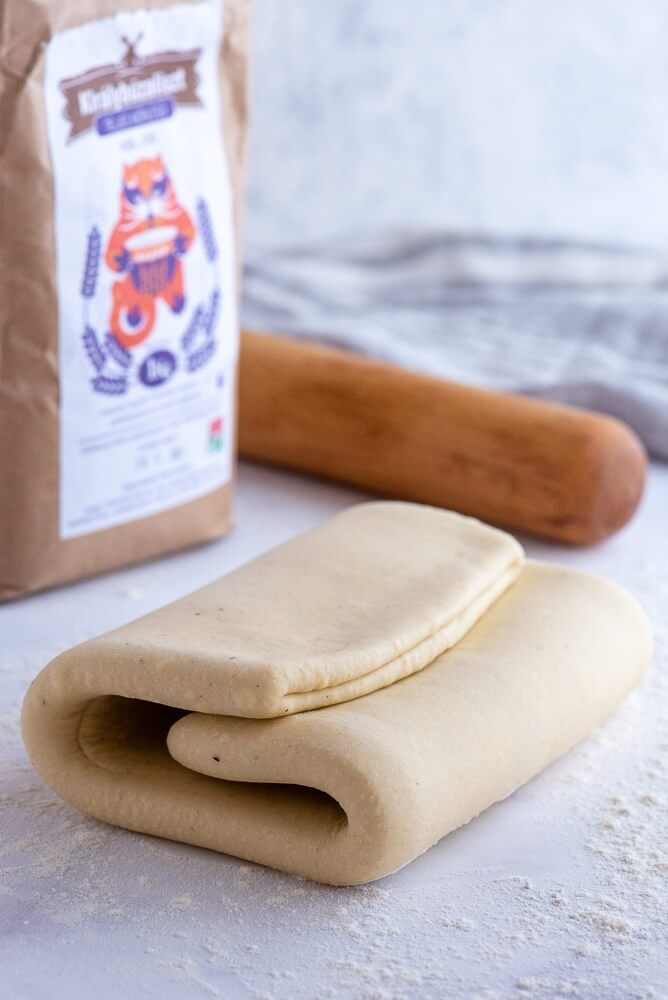
8. Make the first fold: Fold the unbuttered third of the dough over the middle third.
9. Complete the fold: Fold the remaining buttered third over the top. You should now have a neat rectangular parcel. This completes one rollout.
10. Turn the dough: Rotate the dough 90 degrees.
11. Repeat the rolling and folding: Roll the dough into another rectangle and repeat the buttering and folding process with another portion of butter.
12. Complete the final rollout: Turn the dough again and repeat the process once more using the final portion of butter.
Chill Before Using
13. Chill the finished pastry: Once all the rolling and folding has been completed, wrap the pastry in cling film and refrigerate for 30 minutes before using.
14. Use the pastry: The dough is now ready for pies, galettes, turnovers, strudels and other sweet or savoury bakes.
Nigel’s Recipe Tips
Keep the Dough Cool
Temperature makes a big difference when making flaky pastry. You need the butter to remain distinct from the dough rather than melting into it. If the pastry becomes too warm while you are working, the layers will begin to merge.
Use Soft, Not Melted, Butter
The butter needs to be soft enough to spread or dot over the rolled dough. If it is too cold and hard, it can tear the pastry as you fold and roll it. If it becomes too warm or starts to melt, it will soak into the dough rather than creating separate layers.
Chill It if It Becomes Too Soft
This is particularly important during warmer weather. If the dough becomes soft or difficult to handle, place it in the fridge or freezer for about 10 minutes to firm up before continuing.
Don’t Skip the First Rest
The initial 20-minute chill is not simply about cooling the dough. It also allows the flour to absorb the liquid and gives the dough time to relax, which makes the first rollout considerably easier.
Turn the Dough Between Rollouts
Rotate the folded dough 90 degrees before beginning the next rollout. Keeping the rolling and folding process consistent helps distribute the butter throughout the pastry.
Don’t Over-Flour the Work Surface
Use just enough flour to prevent sticking. Too much additional flour can gradually work its way into the pastry and alter the final texture.
Variations
Sweet Flaky Pastry
Keep the 2 tablespoons caster sugar in the dough when making fruit pies, galettes, turnovers and other desserts.
Savoury Flaky Pastry
Leave out the caster sugar when using the pastry for savoury pies, tarts or turnovers.
Extra-Crisp Pastry
For a crisper variation, replace half of the butter with lard. This changes the flavour and texture, so it works particularly well for savoury pastry.
Frequently Asked Questions
What Makes Flaky Pastry Flaky?
The repeated rolling and folding creates layers of dough separated by butter.
During baking, moisture in those butter and dough layers creates steam, helping push the layers apart and producing the characteristic flaky texture.
Why Do I Need to Divide the Butter Into Four Portions?
One portion is incorporated into the initial dough.
The remaining three portions are added individually during the three rolling and folding stages, distributing the butter through the pastry in thin layers.
How Many Times Do I Fold the Pastry?
There are three roll-and-fold stages after making the initial dough. Each time, butter is spread over two-thirds of the rectangle before the pastry is folded into thirds.
Why Does the Dough Need to Chill?
Chilling keeps the butter from melting into the dough and also allows the pastry to relax between stages. The recipe includes 20 minutes chilling after making the dough and another 30 minutes after completing the folds.
What Should I Do if the Pastry Gets Too Warm?
Stop rolling and place the dough in the fridge or freezer for around 10 minutes. Once it has firmed up, continue with the rolling and folding.
Can I Use Buttermilk Instead of Water?
Yes. Use 125 ml buttermilk in place of the water for a slightly richer flavour.
Can I Leave Out the Sugar?
Yes. Leave out the 2 tablespoons caster sugar when making pastry for savoury recipes.
Can I Make Flaky Pastry Ahead?
Yes. The finished pastry can be refrigerated for 4–5 days or frozen for longer storage.
Tools You’ll Need
- Digital kitchen scales
- Medium mixing bowl
- Rolling pin
- Measuring jug
- Measuring spoons
- Cling film
- Pastry scraper, optional
Storage and Freezing
Storing
Wrap the flaky pastry tightly in cling film and keep it in the refrigerator for 4–5 days. Wrapping it well prevents the pastry from drying out and also stops it absorbing other odours from the fridge.
Freezing
The pastry can be frozen for up to 3 months.
Freeze it either:
- As a block, ready to roll later.
- Rolled into a sheet, ready for quicker use.
Wrap it thoroughly before freezing to protect the surface from drying out.
Nutrition
Serving: 100 g flaky pastry.
Calories: 418.91 kcal · 21% DV
Total Fat: 27.49 g · 39% DV
Carbohydrates: 38.23 g · 15% DV
Sugars: 2.69 g · 3% DV
Protein: 5.1 g · 10% DV
Sodium: 22.42 mg · 1% DV
Fibre: 1.26 g · 4% DV
% Daily Values are based on a 2,000-calorie diet.
Nutrition information is provided as an estimate and may vary depending on the ingredients and portion size used.
Flaky Pastry
INGREDIENTS LIST
- 280 g plain flour (all-purpose)
- 1 pinch fine sea salt
- 2 tbsp caster sugar (for sweet pastry items)
- 200 g butter (at room temperature)
- 125 ml water or buttermilk (see notes)
Preparation
- Weigh out the butter and divide it into 4 equal amounts, or if you have a 200g block then it's easy to divide into 4 approximately.
- In a medium bowl, add the flour, salt, sugar (omit for savoury pies) and one portion of the butter.
- Add the water or buttermilk (see notes) and bring the mix to form a soft dough. Form a ball and then flatten it and wrap it in cling film, place it in the fridge for 20 minutes to chill. (This is important for the flour to have time to properly absorb the water content and for the dough to relax, making it easier to roll.)
- Lightly flour the work surface, then roll the dough out to make a rectangle approximately 3-4mm thick.
- Take another portion of butter and dot it or spread it evenly over two-thirds of the rectangle. (The butter should be at room temperature and soft, but not melted.)
- Fold 1/3 of the dough without any butter, over the middle 1/3 of the dough with butter.
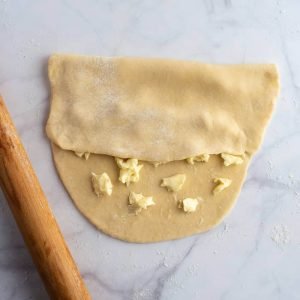
- Then fold over the other 1/3 of the dough with butter, over the top. This completes one rollout.
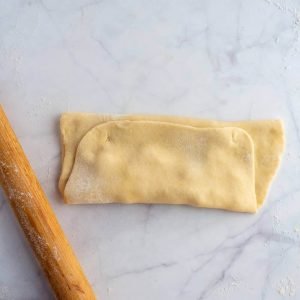
- Turn the dough 90 degrees and repeat steps 4 – 7 two more times with the remaining butter.If it’s summer and it is a particularly hot day, the dough might warm up and soften too much. Don’t worry if this happens, just put it in the fridge or freezer for 10 minutes to firm up.
- Finally, once all the rolls have been completed, cover with cling film again and chill in the fridge for 30 minutes before using.
- The flaky pastry dough is now ready to use for making delicious pies and desserts.
Notes & Tips
FROM MY KITCHEN TO YOURS
Made this recipe?
I would love to hear how it turned out. Leave a comment and add a star rating to help other home cooks discover the recipe.
A recipe worth keeping
Save this recipe for another day
Pin it to one of your boards and keep it close for the next time you are ready to cook or bake.
Save to PinterestKeep cooking
You may also like
 Recipe
Chocolate Chia Pudding
A creamy vegan chocolate chia pudding topped with rich hazelnut fudge sauce for a simple, satisfying dessert or breakfast.
View recipe Recipe
Lemon Crinkle Cookies
Soft lemon crinkle cookies with snowy cracked tops and a bright, refreshing citrus flavour.
View recipe Recipe
Coffee & Walnut Loaf Cake
A moist coffee and walnut loaf cake finished with a smooth espresso and vanilla glaze.
View recipe
Around the table
Questions and kitchen notes
Made this recipe? Leave a rating and tell me how it turned out. Your questions and tips may also help the next person making it.